
Celebrating Five Years of Innovation:
The BIOVEXO Final Conference in Locorotondo
(c) RTDS
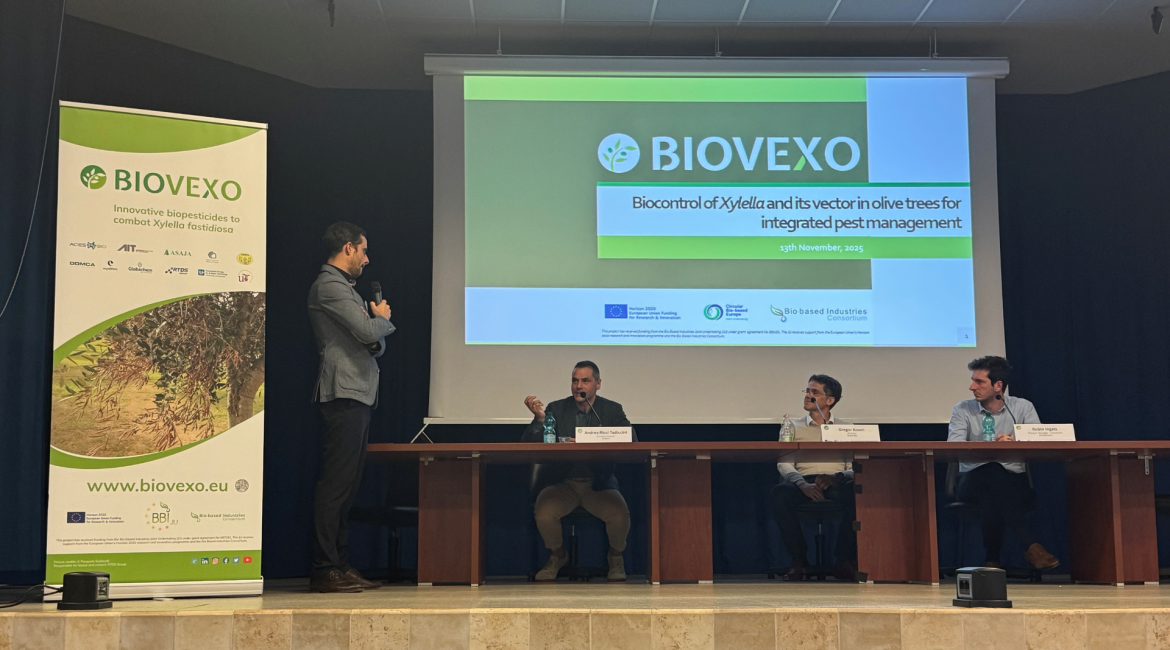
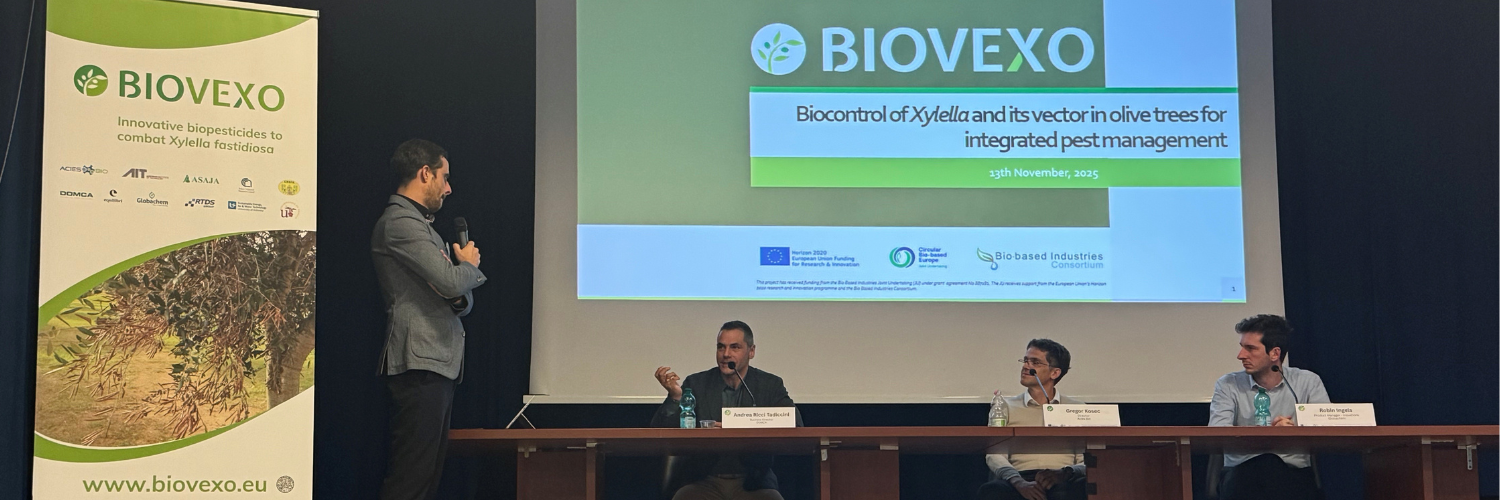
On 13 November 2025, the charming town of Locorotondo in Apulia, Italy, became the vibrant stage for a momentous gathering: the final conference of the BIOVEXO project. After more than five years of intensive research, international collaboration, and shared determination, over 90 participants, comprised of scientists, industry representatives, farmers, and policymakers, convened for a full-day event that marked the culmination of BIOVEXO’s mission to develop sustainable, biological tools against Xylella fastidiosa and its vector.
Setting the Scene: Why Locorotondo?
It was particularly fitting that the conference took place in Apulia, a region at the heart of the Xylella fastidiosa challenge. Known for its ancient olive groves and agricultural heritage, Apulia has endured the devastating impact of this bacterial pathogen. Locorotondo, with its whitewashed buildings and panoramic olive landscapes, provided a symbolic and fitting backdrop for reflecting on the scientific journey and charting the road ahead.
The event was held at the G. Boccardi Auditorium of the I.I.S.S. “Basile Caramia – F. Gigante” institute and proceedings were carried out in English, with simultaneous translation into Italian for selected sessions.
A Gathering of Key Stakeholders
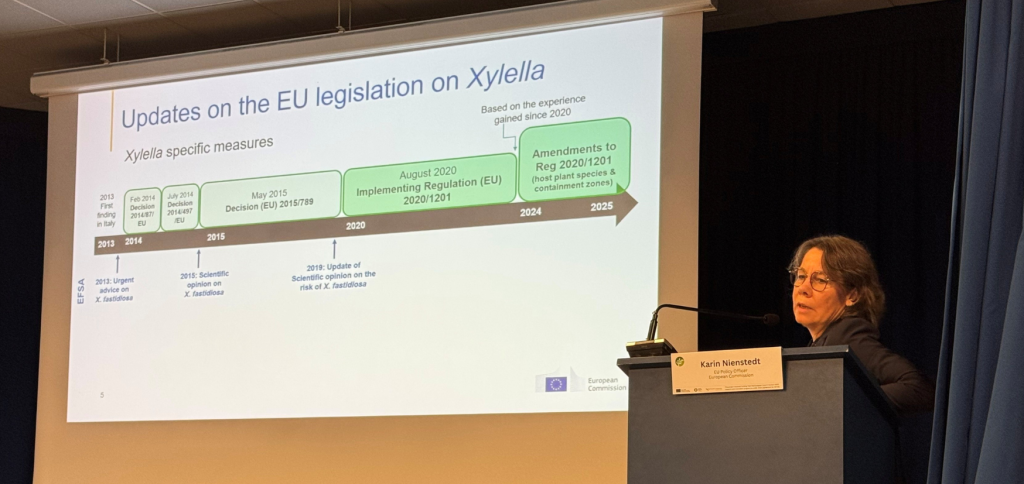
More than 90 attendees came together to engage, learn, and contribute. This diverse audience included academic researchers, representatives from the agricultural industry, olive growers, and decision-makers — all united by a shared goal: translating scientific advances into real-world impact. Among them was Mrs Karin Nienstedt, EU Policy Officer, whose keynote highlighted regulatory developments essential for bringing biocontrol solutions to market.
(c) RTDS
Highlights from the Morning
The conference opened with a warm welcome from project leaders and institutional representatives. Speakers included Stephen Webb (President of RTDS Group), Stéphane Compant (Senior Scientist at AIT), Franco Nigro (Director of CRSFA “Basile Caramia”), as well as Francesco Di Serio (Director of CNR – IPSP).” Their opening words reflected on how collaborative research can bridge regional challenges, scientific innovation, and community resilience.
This was followed by two keynote lectures. Karin Nienstedt, representing EU policy, shared crucial updates on regulation for biopesticides and the evolving legislative framework for Xylella control. Then Giuseppe Stancanelli from EFSA discussed the latest European food safety perspectives and the role of science in shaping future policy.
Active Audience Engagement and Interactive Dialogue
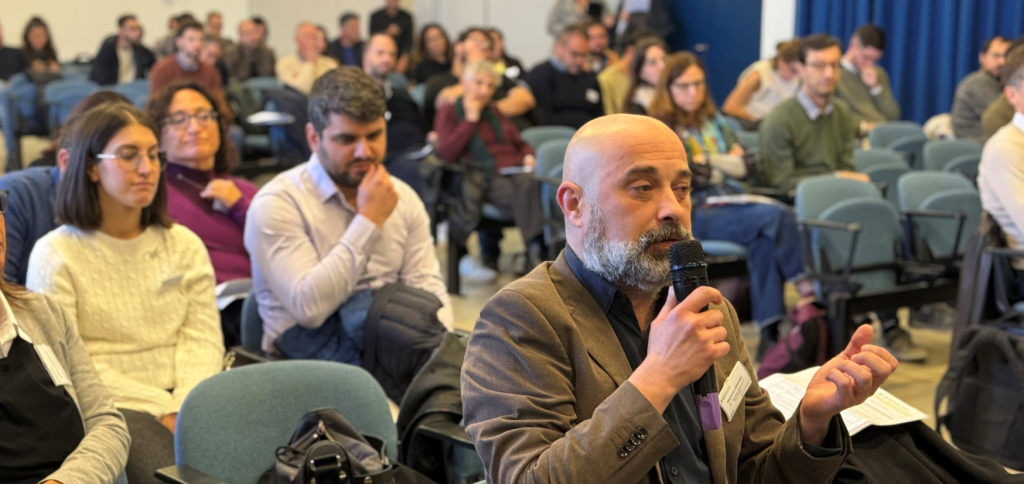
One of the most energising aspects of the day was the high level of interaction between the audience and the speakers. Throughout the presentations and keynote sessions, participants had the opportunity to actively raise questions, share field experiences, and a constructive dialogue on the practical implications of the project’s findings contributed to lively and valuable forum of experience sharing and knowledge exchange. Farmers exchanged viewpoints with scientists, industry representatives sought clarification on technology transfer pathways, and policymakers engaged in discussions on regulatory feasibility.
(c) RTDS
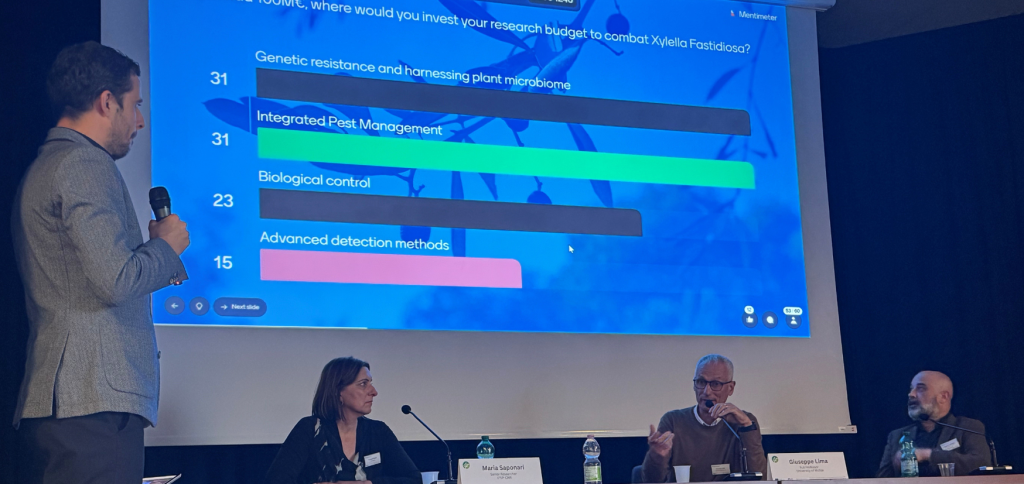
To further enrich this exchange, the conference introduced an interactive digital tool, allowing attendees to submit questions in real time, vote on discussion points, and provide feedback directly to panellists. This not only encouraged participation from those less comfortable speaking publicly but also ensured a dynamic, inclusive atmosphere where a broad range of perspectives helped shape the conversation.
(c) RTDS
Keynote Sessions
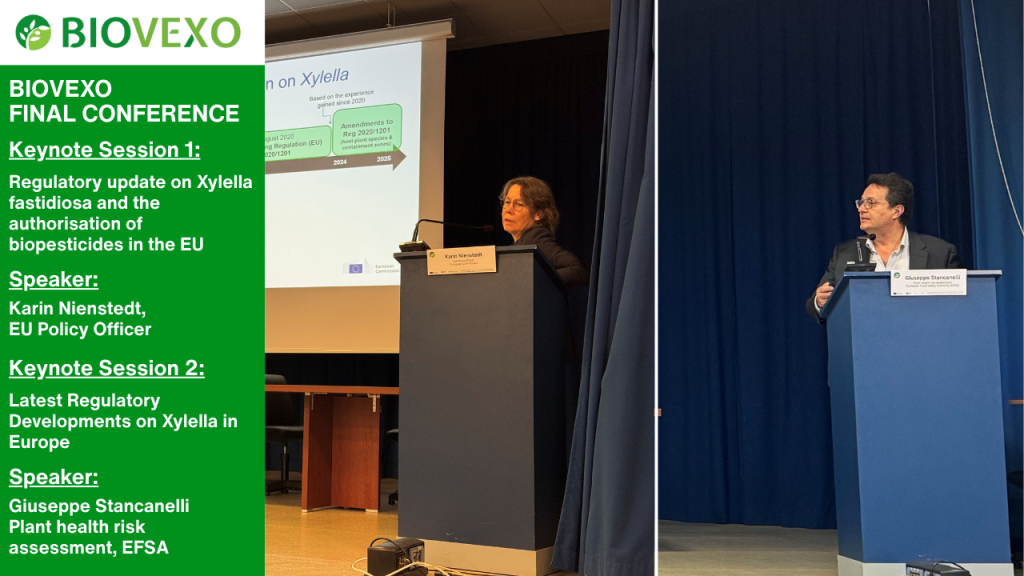
The first keynote, presented by Mrs. Karin Nienstedt, focused on a Regulatory update on Xylella fastidiosa and the authorisation of biopesticides in the EU.
The second keynote had been presented by Mr. Guiseppe Stancanelli, from the Plant Health Risk Assessment at EFSA. He informed the audience on Latest Regulatory Developments on Xylella in Europe.
To watch panel 1 in full length, please click on the button below.
(c) RTDS
Panels: Reflecting, Sharing, and Projecting Forward
The heart of the afternoon was a rich programme of five panels, each designed to spotlight different dimensions of BIOVEXO’s work and its broader implications.
Panel 1:
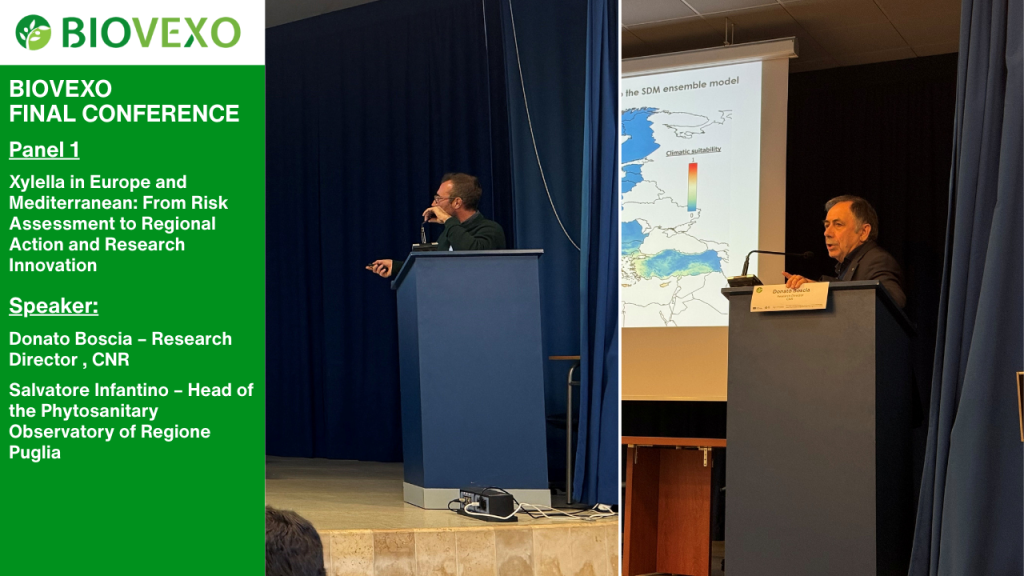
Xylella in Europe and the Mediterranean: From Risk Assessment to Regional Action and Research Innovation
The panel explored the Xylella situation in Europe and Puglia, highlighting research, risk assessment, and regional management strategies.
To watch panel 1 in full length, please click on the button below.
(c) RTDS
Panel 2:
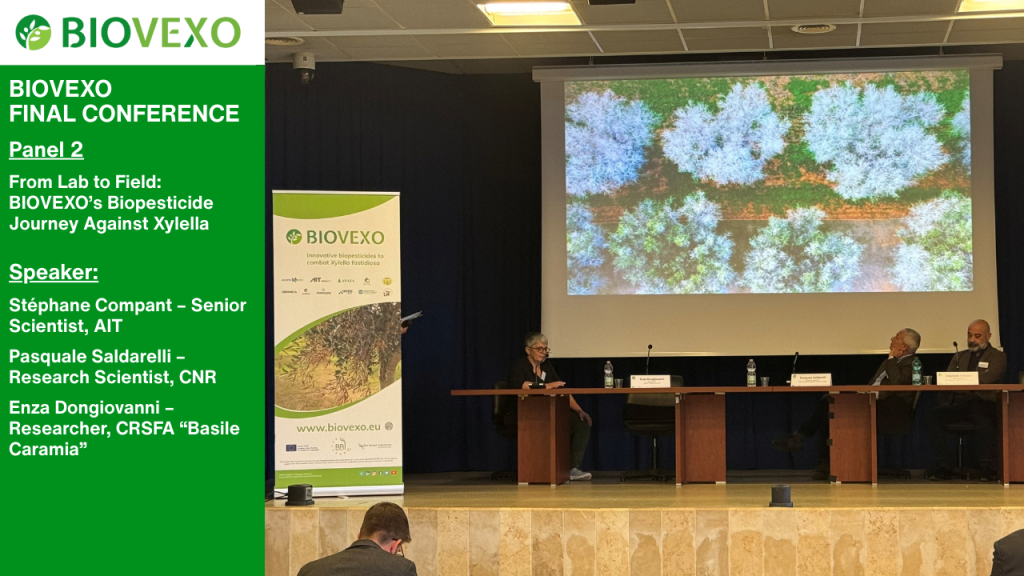
From Lab to Field: BIOVEXO’s Biopesticide Journey Against Xylella
This panel showcased advances made by the BIOVEXO consortium, from discovery to deployment in olive and almond crops.
To watch panel 2 in full length, please click on the button below.
(c) RTDS
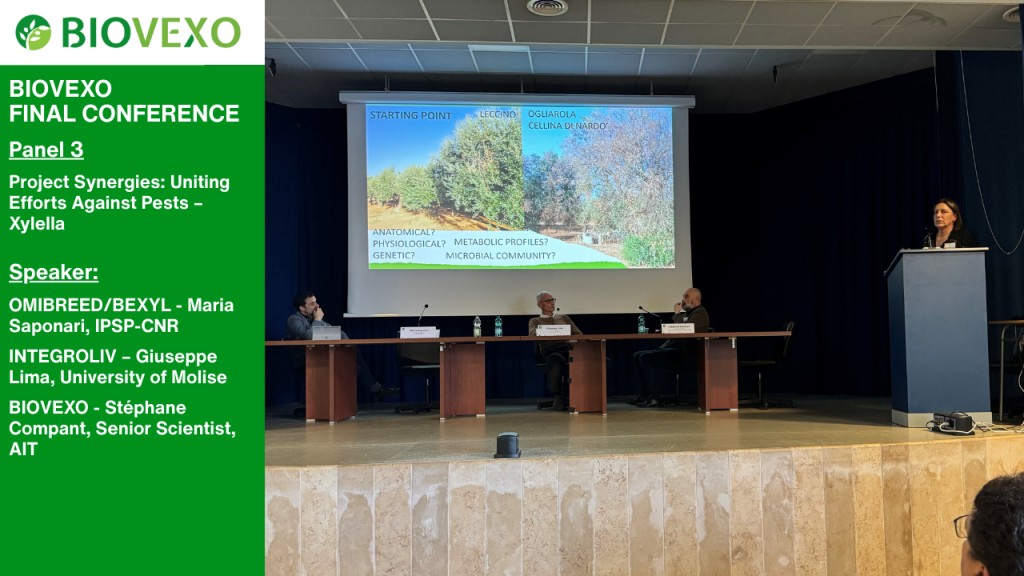
Panel 3:
Project Synergies: Uniting Efforts Against Pests – Xylella
Representatives from four major EU-funded initiatives, BIOVEXO, BeXyl, Integroliv and OMNIBREED shared experiences, alignment strategies, and identified synergies in the fight against pests.
To watch panel 3 in full length, please click on the button below.
(c) RTDS
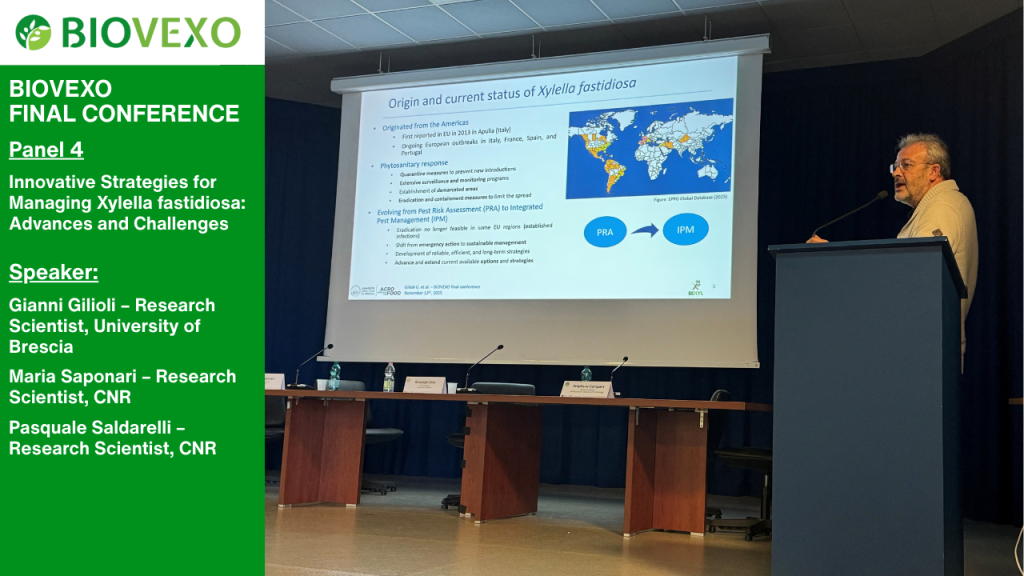
Panel 4:
Innovative Strategies for Managing Xylella fastidiosa: Advances and Challenges
Representatives from four major EU-funded initiatives, BIOVEXO, BeXyl, Integroliv and OMNIBREED shared experiences, alignment strategies, and identified synergies in the fight against pests.
To watch panel 4 in full length, please click on the button below.
(c) RTDS
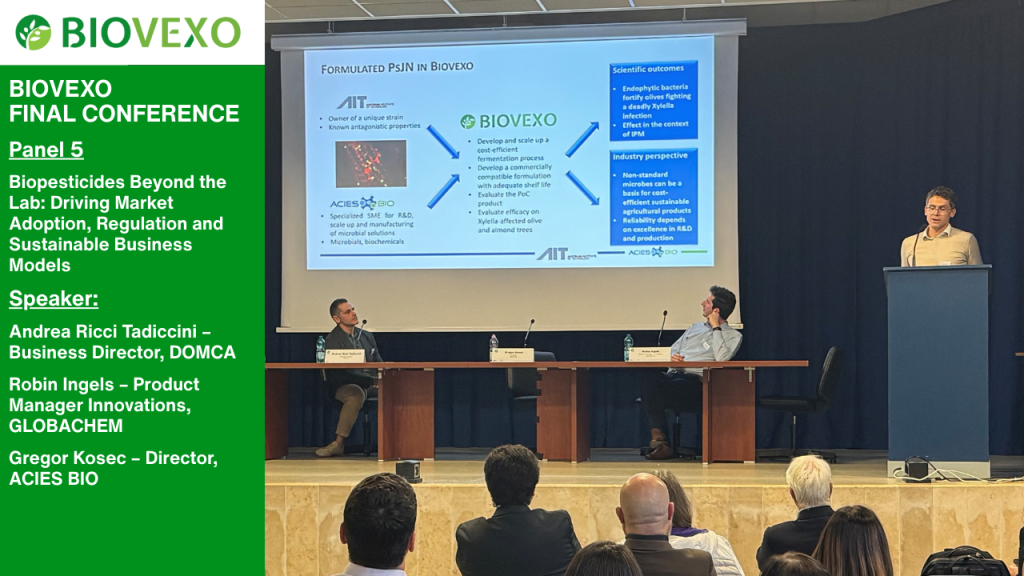
Panel 5:
Biopesticides Beyond the Lab – Regulation, Market Adoption & Business Models
This panel explored the path of biopesticides from research to market, focusing on regulatory, production, and adoption challenges, and highlighted key strategies and lessons learned.
To watch panel 5 in full length, please click on the button below.
(c) RTDS
Key Outcomes and Messages
Several major themes emerged from the conference:
- Evidence of Progress, but Caution in Interpretation
The biopesticides developed under BIOVEXO showed promising effects in field trials, notably slowing symptom progression, and thereby marking an important step. They demonstrate biological activity in natural settings and underscore both the potential and complexity of translating lab-scale findings into farm-scale solutions. - Regulation Is a Critical Frontier
With the involvement of EU policy stakeholders such as Mrs Karin Nienstedt, participants emphasized that getting biocontrol products to market requires navigating a delicate regulatory landscape. The project’s findings must now be aligned with safety standards, risk assessment protocols, and scaling requirements to ensure adoption by farmers. - Synergy Builds Strength
One of the conference’s most powerful themes was cooperation — not just within BIOVEXO but across related European projects. By pooling research, sharing trials, and harmonizing approaches, the community can accelerate progress and avoid duplication, while maintaining a united front against Xylella. - Bridging Science and Practice
The conference highlighted the importance of engaging farmers and industry early and continuously. Demonstration plots in Apulia and Spain, and real-world field validation, bring biocontrol solutions closer to adoption. At the same time, presenting these results to policymakers fosters understanding of practical hurdles and business realities whilst acceptance of thorough regulation processes was well recognized. - Looking Ahead
As BIOVEXO draws to a close at the end of 2025, the event looked forward. There was broad agreement that at least one experimental field should be maintained beyond the life of the project, serving as a living laboratory for continued evaluation, refinement, and technology transfer.
A Moment of Celebration and Reflection
Beyond the data, presentations, and policy discussions, the Locorotondo gathering was a celebration. After half a decade of work, the BIOVEXO partners could pause together, reflect on their achievements, and recognize how far they have come. The conference was a moment of shared ownership — scientists, farmers, regulators, and industry partners together navigating the challenges of a threatening pathogen, and together imagining a more resilient future.
The presence of key figures, from senior researchers to local olive growers, underscored the collaborative spirit. The dialogue extended beyond academic findings into the lived reality of olive cultivation in Apulia, where decisions made in Brussels or in the laboratory will ultimately meet rows of ancient olive trees.
New Animation Highlights BIOVEXO’s Sustainable Fight Against the Threat of Xylella fastidiosa
During the final BIOVEXO event, a new animated video was unveiled to help audiences better understand the serious threat that Xylella fastidiosa poses to olive orchards across southern Europe. The video highlights how this invasive pathogen endangers entire agricultural industries, puts tens of thousands of jobs at risk, and threatens the cultural heritage of regions deeply rooted in olive cultivation. It serves as an accessible, engaging tool to raise awareness and encourage proactive action.
The video also highlights how BIOVEXO has worked for more than five years, from research and laboratory testing to large scale field trials where the BIOVEXO microbial solutions have been tested in real world conditions.
Click on the button below to access the video.
Animation Video (original)
Animation Video (english subtitles)
Animation Video (sottotitoli italiani)
Media Resonance and Outreach
The BIOVEXO Final Event has also generated wide resonance across the regional and international media landscape, underscoring both the urgency of the Xylella challenge and the relevance of the project’s results. Coverage spanned traditional print newspapers, digital news outlets, and television broadcasts, reflecting strong public interest in sustainable plant-health innovations. Journalists highlighted the event’s scientific contributions, stakeholder engagement, and policy relevance, helping disseminate its key messages to broader audiences. This diverse media attention further amplified the project’s impact and ensured its outcomes reached communities well beyond the event’s participants.
Pre-Event Coverage:
Post-Event Coverage:
What’s Next?
As the BIOVEXO project enters its final months, several next steps were clearly outlined:
- Consolidation of Data: Partners will continue analysing field and lab results, preparing scientific publications and regulatory dossiers.
- Product Development and Scaling: The biopesticide candidates showing potential will be refined and scaled up; regulatory strategies will be defined to bring them closer to market.
- Sustained Field Engagement: At least one pilot field site will be kept active beyond project end, enabling further demonstration and knowledge exchange with growers.
- Stakeholder Mobilisation: The momentum built in Locorotondo will feed into ongoing networks, leveraging collaboration with other EU initiatives to push the field of biological control forward — not just for Xylella, but as a model for sustainable agriculture.
As the BIOVEXO journey approaches its end, one thing is certain: the fight against Xylella fastidiosa is far from over. While the project itself will wrap up at the end of the year, the consortium and its partners will continue their work, sharing findings, supporting stakeholders, and contributing to ongoing research and dialogue. In the months ahead, keep an eye out for new scientific publications from BIOVEXO partners, which will highlight important milestones achieved in understanding and managing this complex pathogen. The project may be nearing its close, but its impact — and the collective commitment to protecting Mediterranean agriculture — will continue well beyond 2025.


